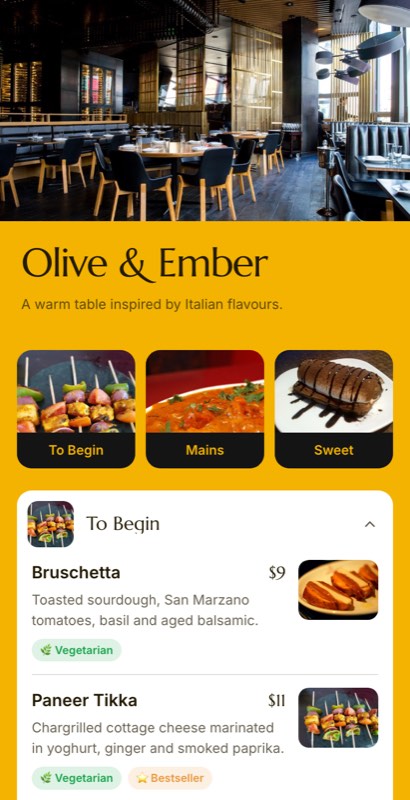
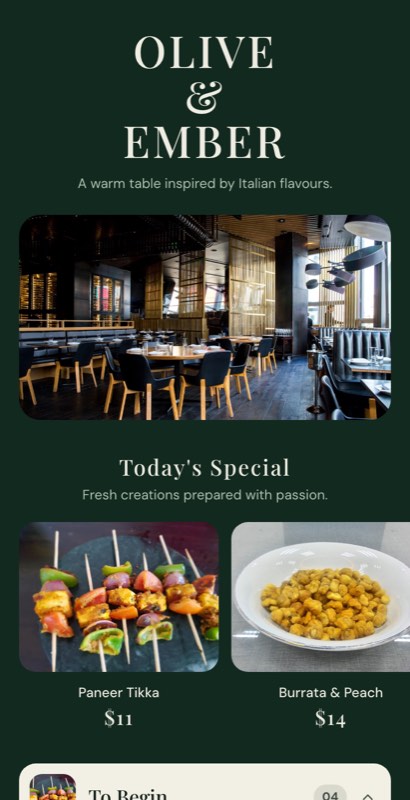
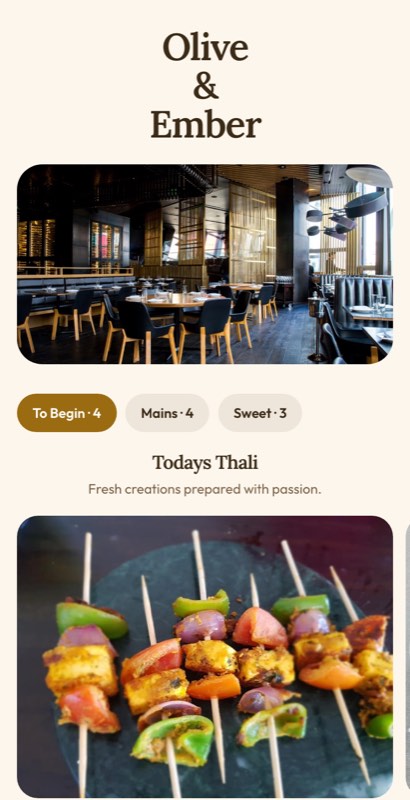
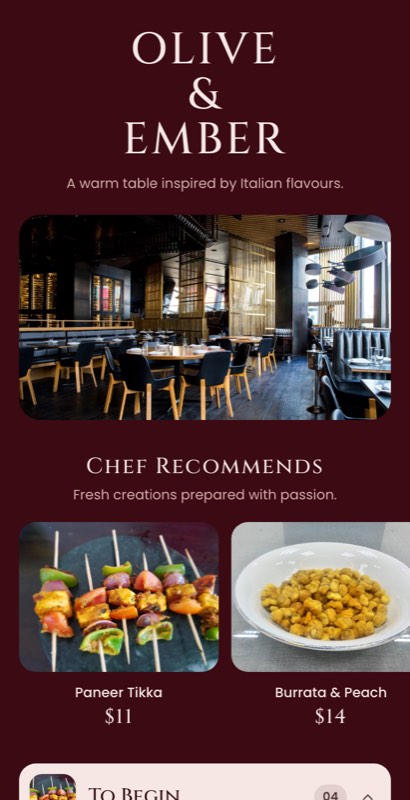
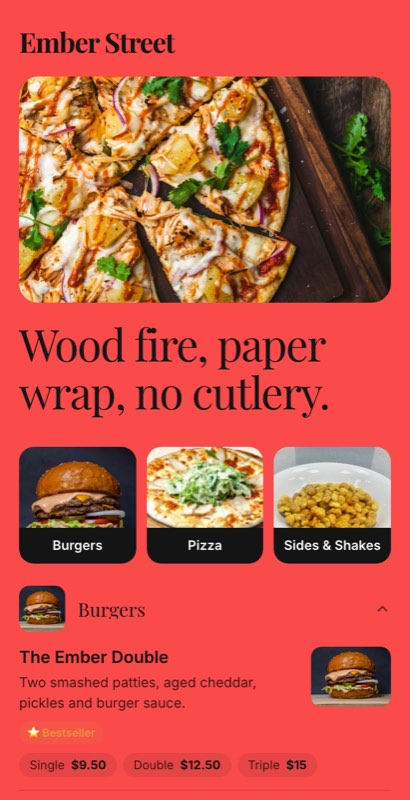
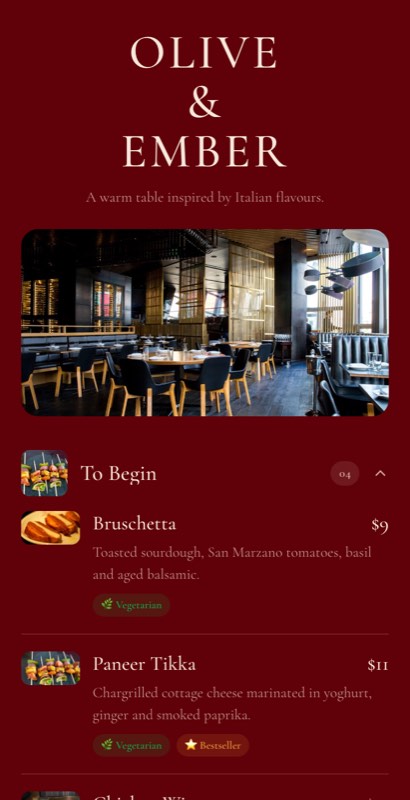
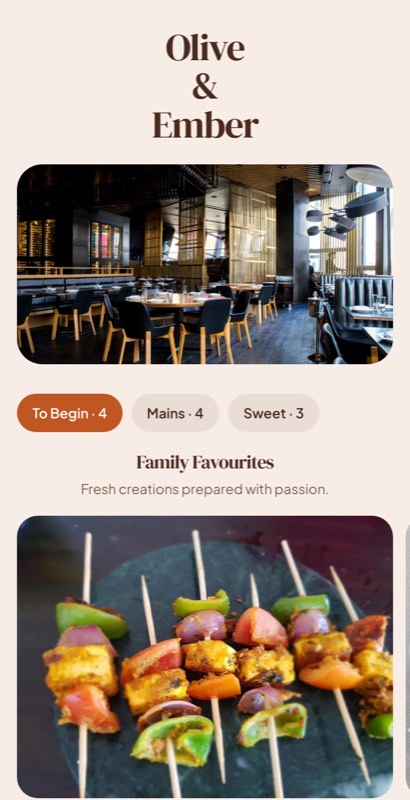
Veg and non-veg marks, Jain options, spice levels, half and full portions, thali sets and a tandoor section that reads properly. The things generic templates quietly get wrong.
Pick the one closest to your room. Everything about it can change afterwards.
Use this template
Use this template
Use this template
Use this template
Use this template
Use this template
Use this template
Use this template
An Indian menu carries conventions no imported template knows about. Veg marks are not decoration — they are the first thing many guests look for. Half and full portions are not sizes, they are separate prices. These layouts treat both as first-class.
A template is a starting point, not a cage.
Green dot, red dot, egg and Jain, drawn to match the template instead of pasted on.
Mild, medium and hot shown the same way on every line, so guests learn it once.
Two portion prices on one row, which is how Indian menus have always worked.
Fixed thalis and combination meals in a block that reads as a set, not as a dish.
Strong section headers and a sticky category bar, because 120 dishes is normal here.
Tax and packaging lines stated where guests expect to find them.
North Indian, South Indian, Mughlai or pan-Indian — the sections differ more than the styling.
Veg, non-veg, egg, Jain and spice levels are configured once and applied to every dish.
Add both portion prices on the dish. The template puts them on one line.
The QR menu goes live and the A4 or A5 card exports in the same click.
A hundred and twenty dishes is a normal Indian menu, not an unusual one. A photo-heavy template that looks beautiful with thirty dishes becomes an endless scroll at a hundred and twenty. Choose a dense, text-led layout with strong section headers and put photos only on the chef’s picks.
For a large share of guests, the green dot is the first thing they look for and the only thing that matters before they read the dish name. If the template renders it small, grey or inconsistently, it is the wrong template — regardless of how good the rest looks.
A thali listed as a single line with one price undersells it. Show what is inside — four items, two breads, sweet — in a block, and it stops competing with the à la carte curry next to it.
Starters, tandoor, curries, breads, rice, dessert is the order most guests expect. Fighting that order to promote a section rarely works; promoting individual dishes inside the expected order works far better.
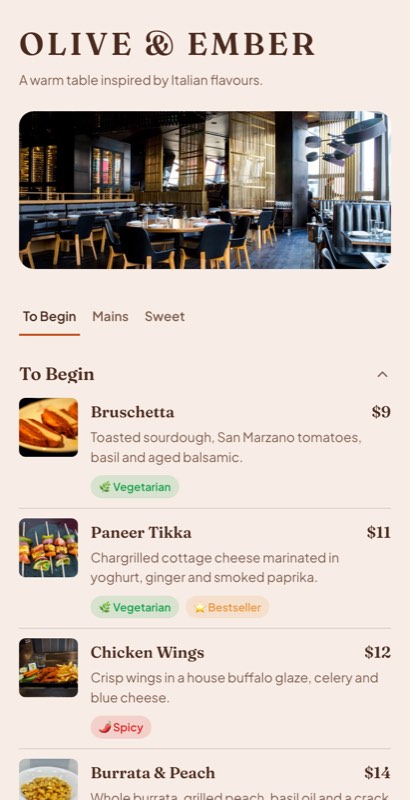
Yes. Green dot, red dot, egg and Jain marks are drawn into each template rather than pasted on as clip art.
Yes, both on the same line, which is how Indian menus are normally read.
Yes, using one consistent scale across the whole menu so guests only have to learn it once.
Yes. The long-menu templates use strong section headers and a sticky category bar so guests can jump rather than scroll.
Yes. Thalis get their own block showing everything included, so they read as sets rather than as single dishes.
Yes, on every plan including the free one. Paid plans add print-ready export and custom fonts.
Sixteen collections, all editable, all free to start from.
Fine dining to casual, ready to edit
See templatesDrinks-first layouts and day parts
See templatesEspresso boards, sizes and milk options
See templatesCounter lists, boxes and daily bakes
See templatesCocktails, pours, tabs and late hours
See templatesSizes, crusts and build-your-own toppings
See templatesCombos, value boards and quick ordering
See templatesShort menus that read from two metres away
See templatesRoom service, lounge, breakfast and banquets
See templatesDelivery-first layouts for multiple brands
See templatesThalis, tandoor, spice levels and Jain marks
You are hereTasting menus, courses and wine pairings
See templatesPatisserie, gelato and dessert-only lists
See templatesEgg builds, all-day brunch and clock rules
See templatesJuices, teas, mocktails and cold cabinets
See templatesCollection, packing notes and family packs
See templatesPick an Indian template, set your marks and portions once, and publish to phone and print together.
No credit card required · Set up in 5 minutes
Tell us two numbers. We’ll estimate the opportunity for your restaurant.
Estimates based on your inputs. Actual results vary.