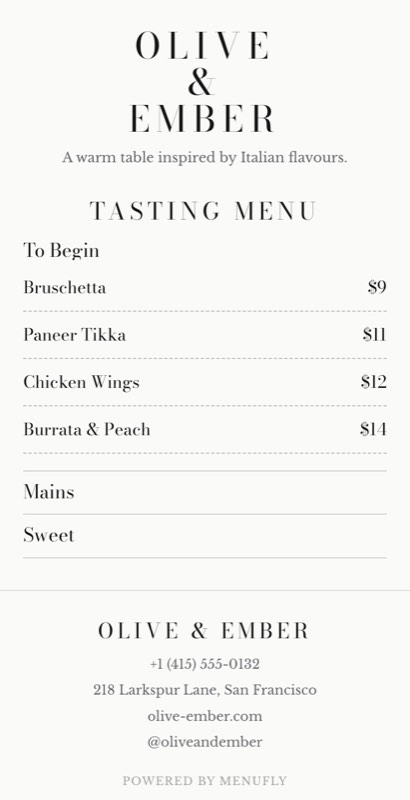
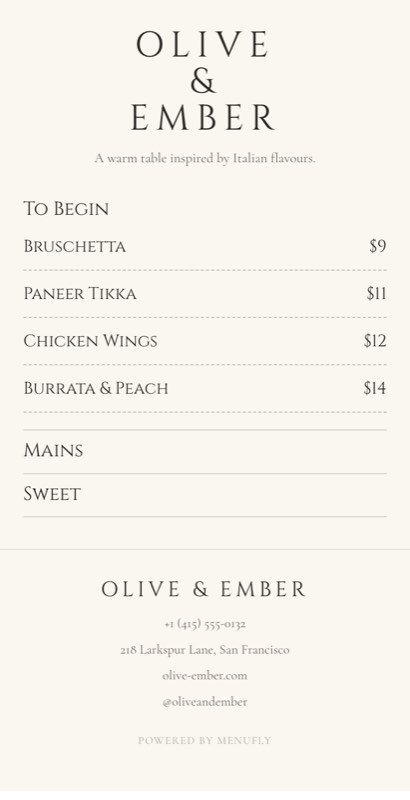
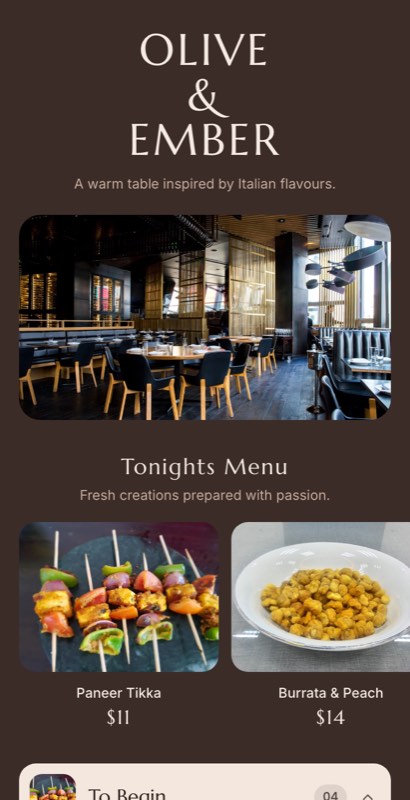
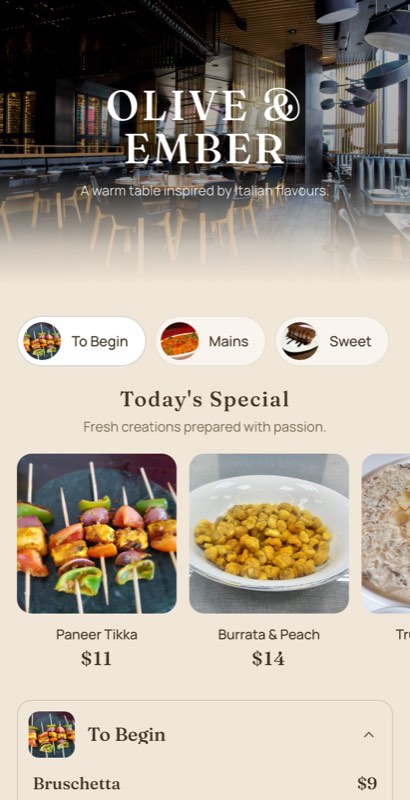
Courses, pairings and a single price at the bottom. Restraint is the design here — these templates are built to hold a tasting menu without a single decorative flourish getting in the way.
Pick the one closest to your room. Everything about it can change afterwards.
Use this template
Use this template
Use this template
Use this template
Use this template
Use this template
Use this template
At this level the menu is not selling — the guest already decided when they booked. Its job is to set expectations precisely and get out of the way. Generous margins, one typeface, no photographs, no badges.
A template is a starting point, not a cage.
Roman or arabic numerals, or none at all — and one price at the bottom of the set.
The pairing sits with its course, so guests see the pair rather than a second list.
Type sizes and margins chosen to sit well on 250 gsm, not just on a screen.
Vegetarian and allergen variants of the same tasting menu, printed per booking.
Change one course without re-laying out the card — the numbering follows.
A digital version for detail and allergens, without putting a screen on every table.
Dark and formal, light and classic, or contemporary and near-bare.
Enter each course with the detail you want read aloud and the detail you do not.
Wines sit with their course, and the full pairing gets its own price.
Export the card for tonight’s seating, including the vegetarian variant.
Every ornament on a fine dining menu is a small claim the food then has to justify. The templates in this collection differ mostly in how much they leave out. When in doubt, pick the plainer one — it will age better and photograph better.
“Oyster, cucumber, dill” sets a precise expectation and leaves the kitchen room. A paragraph of provenance narrows the dish and dates quickly. Save the story for the service, where it belongs.
A vegetarian variant of the tasting menu, printed and waiting at the right cover, is worth more than any amount of menu design. Because the variants come off one item list, keeping them in step costs nothing.
A QR menu at this level is not for browsing at the table — it is for allergens, full wine detail and the guest who wants to read it before they arrive. Design it as a companion, not a replacement.
Yes. Courses are numbered as a set with a single price at the foot, and the à la carte list can sit alongside it.
Yes. The pairing sits with its course rather than in a separate list, and the full pairing carries its own price.
Yes. Variants run off the same item list, so a change to a shared course updates both.
They are drawn for print and adapted for screen, which is the right way round for fine dining. Both export from the same card.
Yes. Swap the course and the numbering and spacing follow automatically.
Yes, on every plan including the free one. Paid plans add print-ready export and custom fonts.
Sixteen collections, all editable, all free to start from.
Fine dining to casual, ready to edit
See templatesDrinks-first layouts and day parts
See templatesEspresso boards, sizes and milk options
See templatesCounter lists, boxes and daily bakes
See templatesCocktails, pours, tabs and late hours
See templatesSizes, crusts and build-your-own toppings
See templatesCombos, value boards and quick ordering
See templatesShort menus that read from two metres away
See templatesRoom service, lounge, breakfast and banquets
See templatesDelivery-first layouts for multiple brands
See templatesThalis, tandoor, spice levels and Jain marks
See templatesTasting menus, courses and wine pairings
You are herePatisserie, gelato and dessert-only lists
See templatesEgg builds, all-day brunch and clock rules
See templatesJuices, teas, mocktails and cold cabinets
See templatesCollection, packing notes and family packs
See templatesPick a fine dining template, set your courses and pairings, and print tonight’s card in a click.
No credit card required · Set up in 5 minutes
Tell us two numbers. We’ll estimate the opportunity for your restaurant.
Estimates based on your inputs. Actual results vary.