
Introduction
The best breakfast menu ideas are not the longest list of dishes. They are a short, fast, well-priced menu that your kitchen can send out in under ten minutes, with coffee attached to almost every order.
We have spent more than 15 years designing and printing menus for restaurants, cafes, hotels and bakeries. Breakfast menus are where we see owners lose the most money, quietly. A kitchen promises 40 dishes at 7 a.m. with two cooks. A beautiful menu gets printed 300 times, then the price of eggs changes. A cafe lists coffee on a separate card that nobody turns over.
This guide gives you 30 breakfast menu ideas you can actually use, split into three groups: classic and cafe dishes, Indian breakfast menu ideas, and the menu structure ideas that decide whether a breakfast service makes money. After that, we cover breakfast menu design, breakfast menu layout and the printing mistakes worth avoiding.
Who this is for: cafe owners planning a first breakfast menu, restaurants adding a morning service, and hotels or diners refreshing a menu that has stopped working.
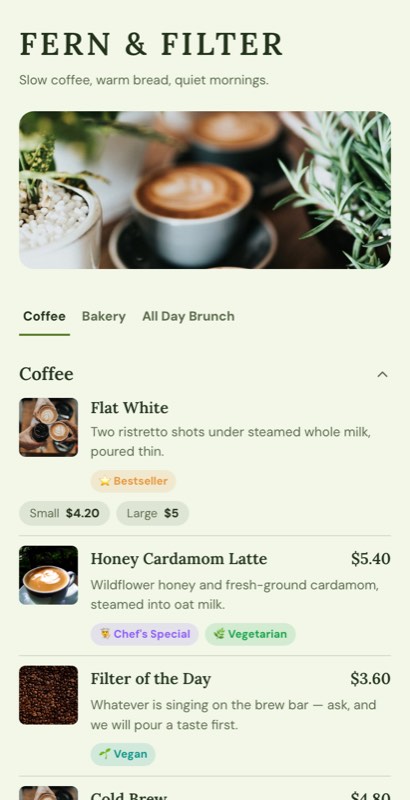
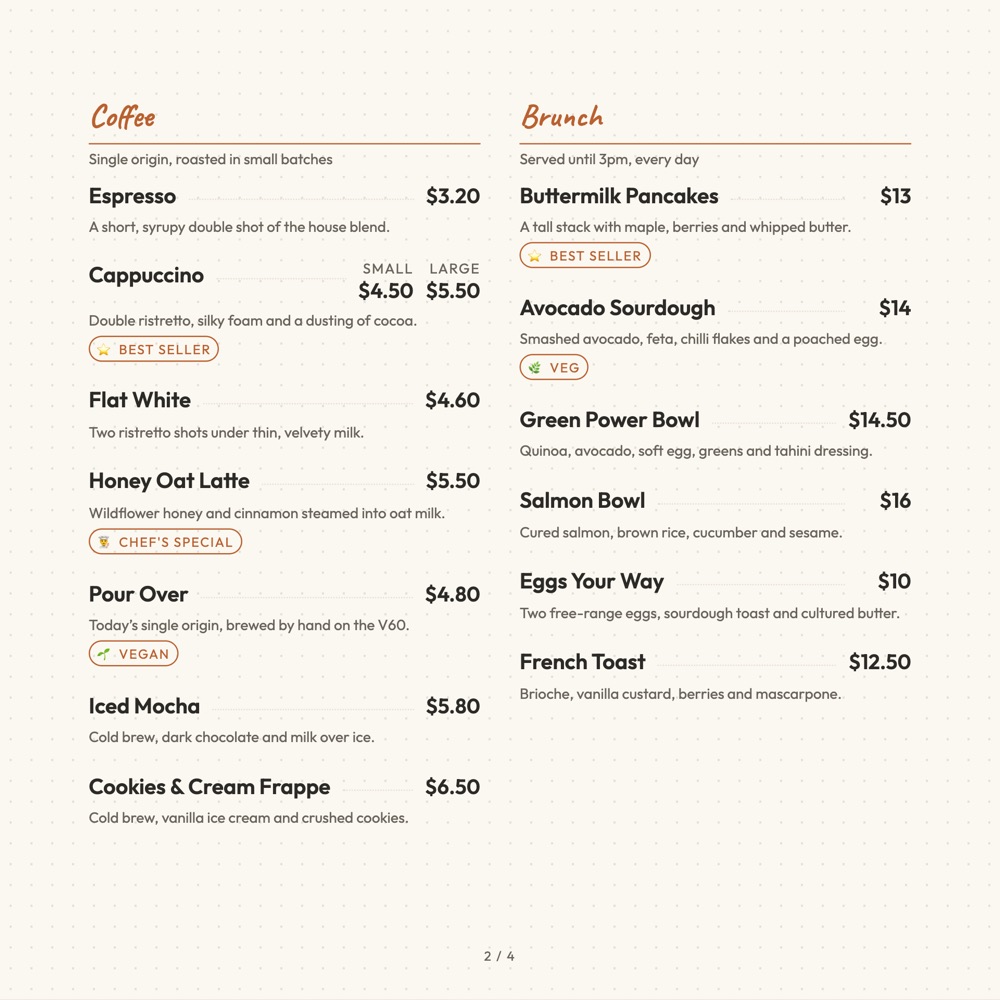
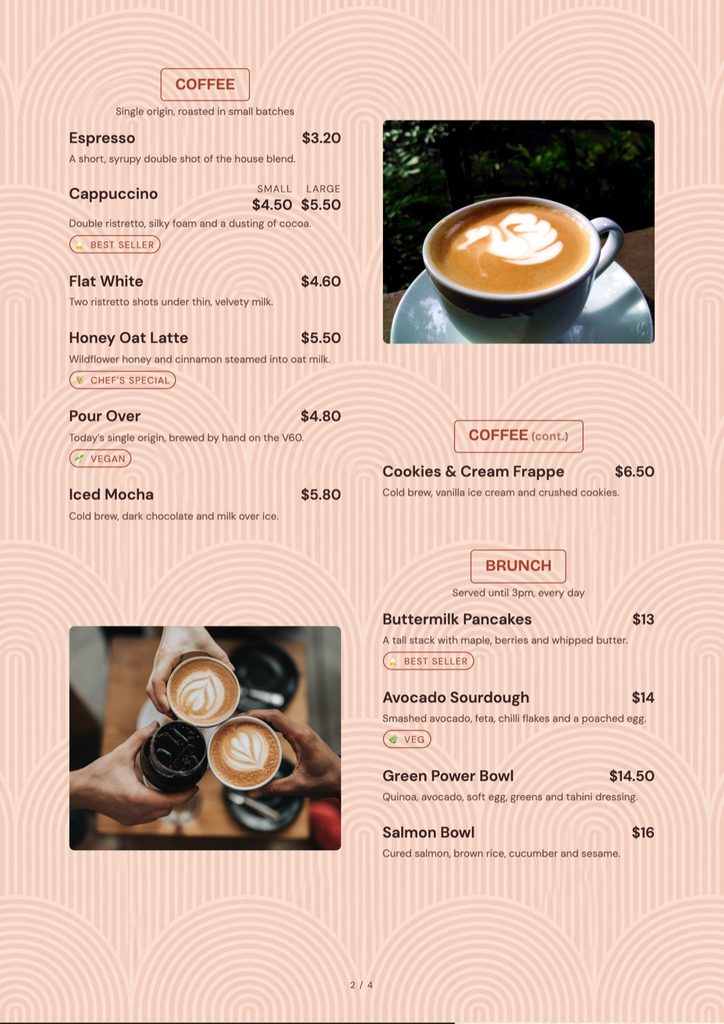
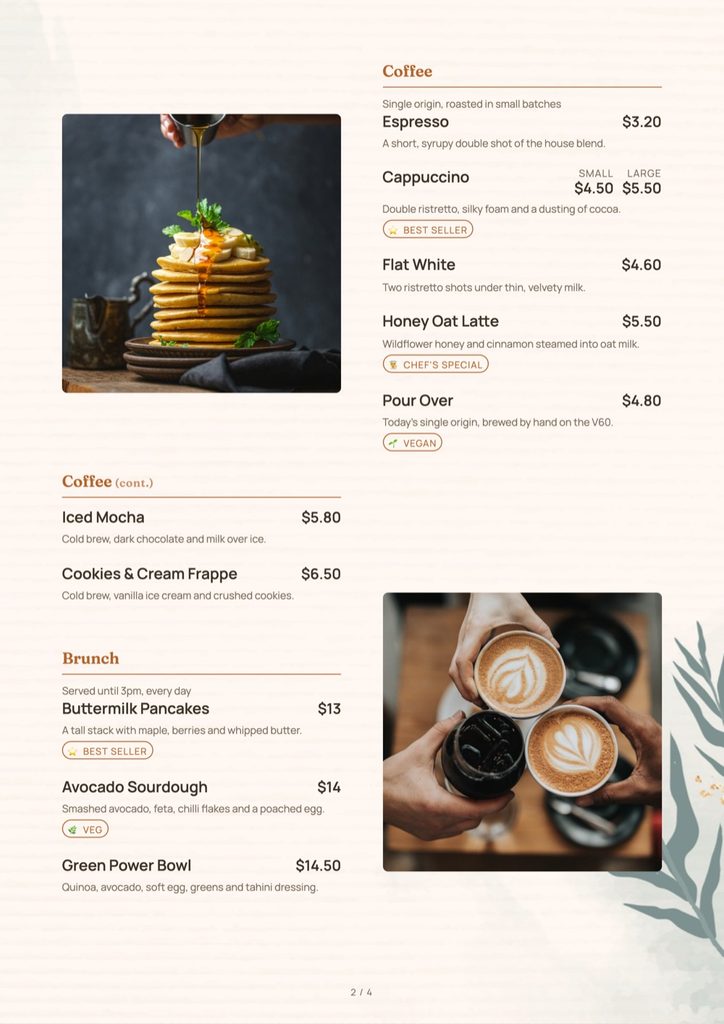
Samples Menus
Before you pick dishes: what makes a breakfast menu work
A profitable breakfast menu is built around three things: speed, shared ingredients and drink attachment. Get these right and almost any dish list will work. Get them wrong and even great food struggles.
1. Speed beats variety. Breakfast guests are often on a clock: office workers, parents after the school run, hotel guests before checkout. Every dish should leave the pass in roughly 8 to 12 minutes at peak. If a dish needs 20 minutes, it belongs on a weekend brunch menu, not the weekday one.
2. Cross-use your ingredients. The strongest breakfast menus we have designed reuse the same 15 to 25 core ingredients across most dishes. Eggs, bread, potatoes, seasonal fruit, yogurt, a house batter and one or two sauces can carry a whole menu. Less stock means less waste, faster prep and simpler training.
3. Plan the drink, not just the plate. In cafes, coffee and juice usually carry better margins than the food. A breakfast menu that never mentions drinks next to the dishes leaves money on the table. We cover how to fix that in ideas 21 to 30.
A quick size guide
| Business type | Food items that usually work | Notes |
|---|---|---|
| Small cafe, 1 to 2 cooks | 8 to 12 | Plus pastries and a short drinks list |
| Full-service restaurant | 12 to 20 | Split into clear sections |
| Hotel or all-day diner | 20 to 30 | Needs strong sections and a clear layout |
These are working ranges from our own projects, not hard rules. If your kitchen can execute more without slowing down, list more. If tickets are backing up at 9 a.m., cut first and redesign second.
Ideas 1 to 10: classic and cafe breakfast menu ideas
These ten dishes form the backbone of most cafe breakfast menus. Pick the ones that share ingredients with each other, not all ten.
1. Build-your-own eggs
One line, three choices: egg style (fried, scrambled, poached), bread (sourdough, multigrain, croissant) and one side. Guests feel they have options, but your kitchen is cooking the same base. On the menu, show it as a single item with option groups instead of nine separate listings.
2. Loaded avocado toast
Still one of the most-ordered cafe breakfast items, and easy to price well. Offer one base version and two or three toppings (poached egg, feta and chilli, smoked salmon) as priced add-ons. A $9 toast can become a $13 plate without any new prep station.
3. The signature breakfast plate
Every menu needs one dish people photograph and come back for. A full breakfast, a big brunch plate or a regional special works. Give it a name that belongs to your place, not “Big Breakfast”. This is the dish to put in the strongest spot on the page.
4. Pancakes or French toast, sweet and savoury
One batter, two directions. Sweet with berries and maple, savoury with bacon or a fried egg. Families and weekend crowds love this section, and batter costs very little per plate.
5. Breakfast burrito or wrap
The best takeaway breakfast item there is. It travels well, holds heat and can be eaten one-handed. If you run delivery or a grab-and-go counter, this one earns its place.
6. Yogurt and granola bowls
House granola is cheap to make in batches and has a long shelf life. Bowls need no cooking at order time, which takes pressure off the line during the rush.
7. Smoothie bowls
Great in warm climates and with younger guests, but be honest about the labour. Blending to order slows the bar. If your coffee station is already the bottleneck, skip these or prep bases ahead.
8. Overnight oats and chia pots
Made the night before, sold in the morning. Ideal for a counter fridge and for guests who want something light and quick.
9. Breakfast sandwich or bagel
An egg, a protein and cheese in good bread is a reliable seller in any cafe breakfast menu. Two or three versions are usually enough.
10. Bakery and pastry board
Croissants, muffins, banana bread and one seasonal bake. Pastries sell with coffee better than almost anything else, so list them right next to your drinks, not on a separate card.
Ideas 11 to 20: Indian breakfast menu ideas
Indian breakfasts are fast, filling and built on batters and doughs that scale well, which makes them excellent for restaurants. These Indian breakfast menu ideas work for Indian restaurants and for cafes that want a regional section.
11. Idli and vada combos
Steamed idli with sambar and chutney is quick to plate once the batter is ready. Sell it as a combo (2 idli + 1 vada) rather than per piece. Combos are easier to order and lift the average bill.
12. Dosa section with fillings
Plain, masala, onion, cheese, ghee roast. One batter, many dishes. On the menu, list the base dosa with fillings as add-ons instead of eight separate lines, and the section reads much cleaner.
13. Poha and upma
Light, low-cost and fast. These are breakfast staples in many homes, so keep pricing fair and focus on quality toppings: peanuts, sev, fresh coriander, lemon.
14. Stuffed parathas
Aloo, gobi, paneer, methi. Serve with curd, pickle and butter. Parathas can be par-cooked ahead and finished to order, which keeps tickets moving.
15. Chole bhature or puri bhaji
A heavier weekend favourite. Consider putting it on a weekend-only list so the fryer is not tied up during weekday rush.
16. Misal pav
A Maharashtrian classic with a loyal following. Offer spice levels (mild, medium, Kolhapuri-hot) as a simple option line.
17. Pesarattu and uttapam
Good choices for health-focused guests: moong dal crepes and thick vegetable uttapam. Mark them clearly with a small “high protein” or “vegan” tag if true.
18. Indian egg dishes
Masala omelette, anda bhurji, egg paratha. These bridge Indian and Western breakfasts and work well in cafes with a mixed crowd.
19. South or North Indian thali breakfast
A small platter with a little of everything: mini idli, mini dosa, vada, upma, kesari. It solves choice paralysis for first-time guests and photographs well.
20. Chai and filter coffee pairings
Not a dish, but it matters most. Pair every combo with masala chai or filter coffee at a set price. In Indian breakfast service, the drink is often the reason people come back daily.
Tip from our print work: Indian breakfast menus often list 40+ items across idli, dosa, paratha and rice dishes. When we redesign these, the biggest gain comes from grouping by base (batter, dough, rice) and showing fillings as options. The menu gets shorter, the kitchen stays the same.
Ideas 21 to 30: menu structure, pricing and upsell ideas
The dishes get guests in. These ten ideas decide how much each guest spends and how smoothly service runs.
21. Breakfast sets next to à la carte
Show a set price beside the individual price: “Eggs, toast, hash brown + regular coffee: $14 (à la carte $17)”. Guests see the saving instantly, and you sell a drink with every set.
22. Priced add-ons on one line
“Add: egg $2 · bacon $3 · avocado $3 · halloumi $3”. One clean line under a section does more than a separate extras box at the bottom of the page that nobody reads.
23. Clear serving hours
Write the breakfast window right under the section title, for example “Served 7:00 to 11:30”. It prevents the awkward 11:45 order your kitchen has already switched away from.
24. An all-day breakfast section
If a few dishes can run all day without disrupting lunch, give them their own permanent section. It keeps the timed breakfast list short and still catches late risers.
25. A separate weekend brunch list
Weekend guests have more time and spend more. Put slower, higher-priced plates and brunch drinks here instead of crowding the weekday menu.
26. A small kids’ breakfast
Three items, small portions, simple pricing. Families decide where to eat based on whether the children are covered.
27. Dietary tags with a legend
V, VG, GF, contains nuts. Use small letters or icons and explain them once at the bottom. Avoid colour-only tags; they disappear in black-and-white printing and are hard to read for colour-blind guests.
28. A rotating seasonal special
One dish that changes monthly gives regulars a reason to look at the menu again. Keep it on a small insert, a board or the digital menu so you never reprint the main menu for it.
29. Calm price formatting
Write “12” or “12.50”, not “$12.00”, and avoid dotted lines that lead the eye straight to the price. Hospitality research from Cornell has suggested that guests spend slightly more when prices look less like a bill. Whatever you choose, be consistent across the whole menu.
30. A drink prompt under every food section
“Goes well with: fresh orange juice 5 · flat white 4.50”. It is the simplest upsell we know. If you run a digital menu with analytics, check how often breakfast orders include a drink before and after you add it.
Breakfast menu design: what we have learned from 15+ years of menus
Good breakfast menu design is about reading speed. Morning guests are hungry, half-awake and often in a hurry, so the menu must be scannable in under a minute.
Choose the right breakfast menu layout
| Layout | Best for | Watch out for |
|---|---|---|
| Single page, single column (e.g. 5.5 × 11 in or A4) | Small cafes, 8 to 15 items | Easy to read, but space runs out fast |
| Single page, two columns | Most cafe breakfast menus | Keep food left, drinks right, or the reverse, consistently |
| Bi-fold (4 panels) | Restaurants and hotels with 20+ items | Guests scan the inside right panel early; put a strong section there |
| Table card or tent | Quick-service and hotel buffets | Only for very short lists |
| QR or digital menu | Menus that change often | Should match the printed menu exactly |
You will hear about “golden triangles” and exact eye paths. Eye-tracking studies on menus actually disagree about how people read them. Our practical rule is simpler: put your best-margin dish at the top of a section or in a lightly boxed space, and do not bury it at the bottom of a long list.
Typography that works at 7 a.m.
- Dish names at roughly 11 to 14 pt, descriptions at 9 to 11 pt for a typical printed menu.
- One or two typefaces, not four. A display font for headings, a clean readable font for everything else.
- Strong contrast. Light grey text on cream paper looks elegant on screen and becomes unreadable in a dim corner.
- Short descriptions: one line, focused on the ingredient that makes the dish yours.
Photos: fewer and better
One or two excellent photos lift a breakfast menu. Twelve average phone photos make it look like a fast-food board. If you cannot shoot well, use no photos and let typography and colour do the work.
Breakfast colours and branding
Warm, light palettes (cream, soft yellow, terracotta, sage) suit breakfast and print reliably. Very dark backgrounds with small white text are hard to read and use far more ink. Keep your logo, colours and fonts the same across the printed menu, the QR menu and your social posts.
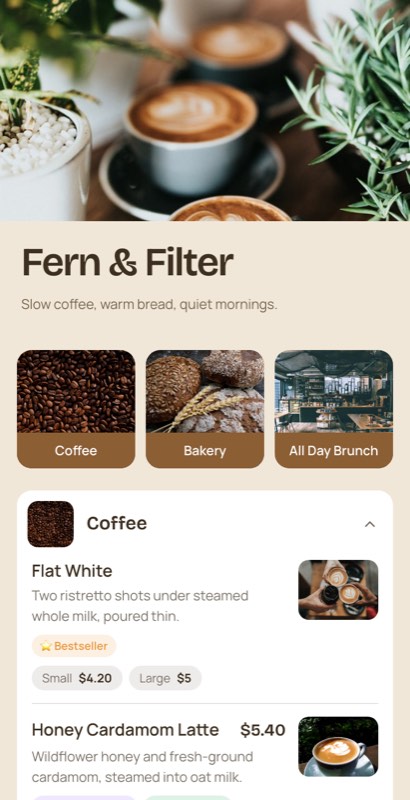
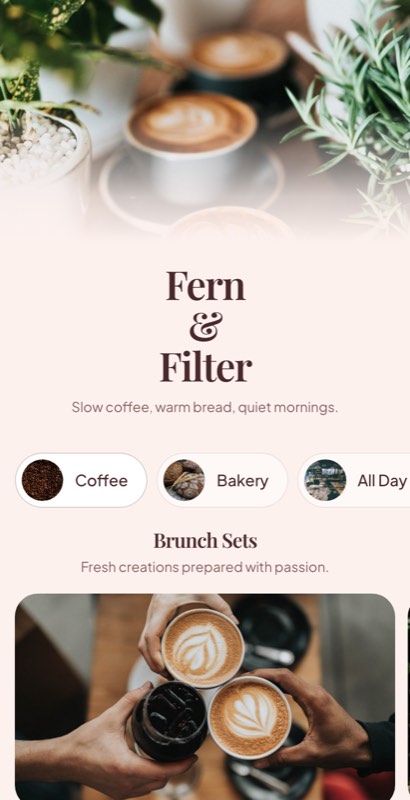
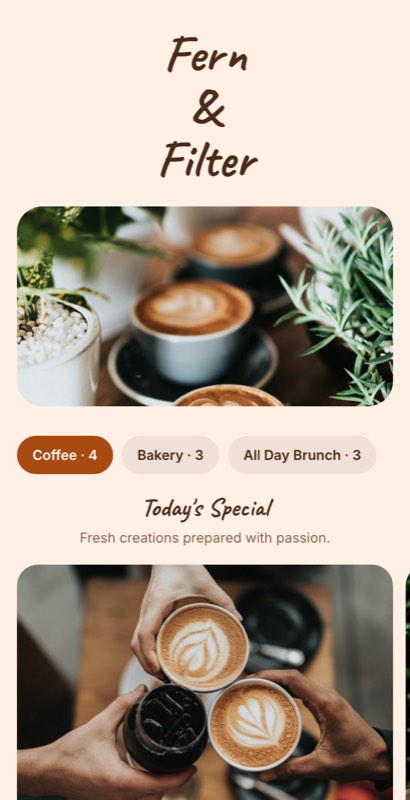
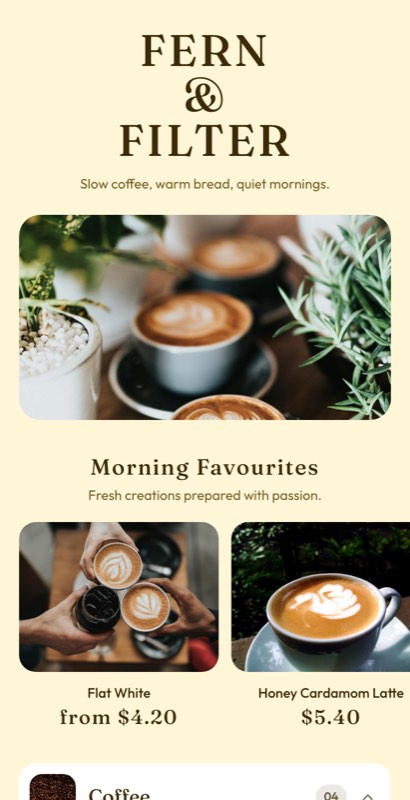
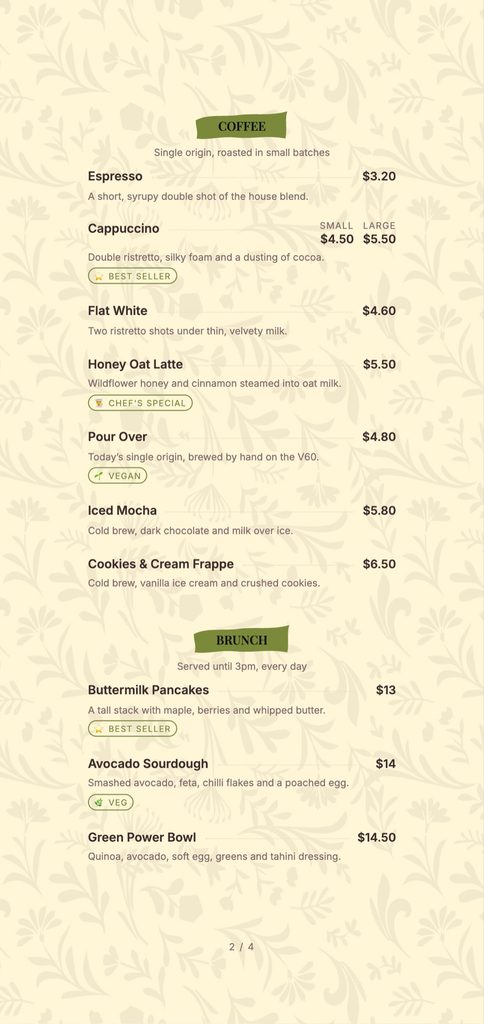
If you want to start from a tested layout instead of a blank page, our breakfast menu templates include single-column cafe layouts, two-column coffee and brunch layouts and photo-led designs that you can edit and export.
Breakfast menu printing: mistakes that cost real money
Most menu money is not lost on design. It is lost on reprints. Breakfast menus change often because egg, dairy, coffee and fruit prices move, so plan for change from day one.
A typical cost picture
Here is an illustrative example for a mid-sized cafe. Real prices vary a lot by city, printer and paper, so treat these as ballpark numbers.
| Cost item | Traditional route | Leaner route |
|---|---|---|
| Menu design | $200 to $600 for a freelance designer | Edit a template yourself |
| First print run | 150 laminated menus at about $3 each = $450 | 40 menus for tables, about $120 |
| Two price updates a year | Designer edits + 2 reprints, roughly $900 to $1,100 | Edit once, reprint only 40, about $240 |
| QR menu | Often a separate tool or ignored | Same content as print |
The saving does not come from cheap paper. It comes from printing fewer copies and changing content in one place.
Mistakes we see again and again
- Printing too many copies. Order for your seats plus about 20 percent spare, not 500 “because it is cheaper per piece”. Most of the extra copies end up in a box when prices change.
- Designing in RGB for a CMYK press. Bright oranges and greens shift on print. Ask your printer for a proof, or export a print-ready PDF in the right colour mode.
- No bleed or safe margins. Backgrounds need around 0.125 in (3 mm) of bleed, and text should stay at least 0.25 in from the trim. Otherwise you get white slivers or cut-off prices.
- Low-resolution photos. A photo that looks fine on a phone often prints soft. Aim for 300 dpi at the printed size.
- Paper that cannot survive breakfast. Syrup, butter and coffee rings destroy uncoated paper in days. Use lamination, a synthetic waterproof stock, or wipeable menu covers.
- Printed menu and QR menu disagree. Guests notice when the table menu says $11 and the QR menu says $12. Keep one source of truth.
- Odd sizes without checking the printer. Custom sizes can look great but cost more to cut and may need new menu covers. Check before you design.
Why we built MenuFly
After 15+ years of designing and printing menus, we kept seeing the same pattern. Owners paid for a good design, printed hundreds of copies, then paid again every time a price changed. Small cafes often skipped professional design entirely because the cost did not make sense for a one-page breakfast menu.
That is why we launched MenuFly.app. The idea is simple: start from a professionally designed template, edit dishes and prices yourself, and use the same content for both your QR menu and a print-ready PDF. A price change is made once and shows up in both. Breakfast-specific details are built in, such as timed sections that switch from breakfast to brunch at set hours, egg builds as option groups, set prices beside à la carte, and drinks as priced add-ons. Templates are free to try without a credit card, and A4 PDF export is included on every plan.
Whether you use MenuFly, another tool or a local designer, the principles above stay the same: print less, change content in one place, and design for reading speed.
Frequently asked questions
How many items should a breakfast menu have?
For most cafes, 8 to 12 food items plus pastries and drinks is enough. Full-service restaurants usually do well with 12 to 20. Go bigger only if your kitchen can keep tickets under about 12 minutes at peak.
What are the most popular items on a cafe breakfast menu?
Egg dishes, avocado toast, pancakes or French toast, breakfast sandwiches, granola bowls and pastries with coffee are the steady sellers in most cafes. Add one signature plate that only you serve.
What should an Indian breakfast menu include?
A strong Indian breakfast menu usually covers idli and vada, a dosa section, poha or upma, stuffed parathas and chai or filter coffee. Add regional favourites such as misal pav or chole bhature based on your location.
What is the best breakfast menu layout?
A single page with two columns works for most cafe breakfast menus. Use a bi-fold only when you have more than about 20 items, and keep drinks visible next to the food.
Should breakfast and lunch be on the same menu?
If your menu is short, one menu with clearly timed sections works well. If both lists are long, separate them. A digital menu can switch sections automatically by time, so guests only see what the kitchen is serving.
How often should I update my breakfast menu?
Review prices every three to six months and the dish list at least once a year. Change one seasonal special monthly so regulars have something new without a full reprint.
How much does it cost to design and print a breakfast menu?
It ranges from almost nothing with a template and a small print run to $1,000 or more with a designer and large laminated runs. The biggest long-term cost is usually reprinting after price changes, not the first design.
Final thoughts
The best breakfast menu ideas share one trait: they make service faster and the bill slightly bigger without making the guest work harder. Pick dishes that share ingredients, show drinks next to food, use sets and add-ons, and design the page so it can be read in a minute.
Start small. Launch with 10 strong dishes, watch what sells for a month, then cut and refine. If you want a head start on breakfast menu design, browse our breakfast menu templates and adapt one to your own dishes and brand.